
A warm tendon after a hard schooling session can make even the most experienced owner pause. Tendons have a demanding job: they absorb and release huge forces with every stride, and when they are strained, healing can be slow and easily set back. Knowing how to support horse tendons naturally gives you practical ways to protect your horse’s comfort and long-term soundness while working alongside your vet.
Natural tendon care is not about replacing professional diagnosis with a quick fix. It is about creating the best possible daily conditions for recovery: reducing unnecessary stress, supporting circulation, feeding appropriately, managing exercise carefully and noticing small changes before they become bigger problems.
Why horse tendons need patient support
Unlike muscle, tendon tissue has a relatively limited blood supply. That is one reason tendon injuries often require a long, measured rehabilitation period. A horse may look brighter and move more freely before the tendon has regained enough strength to cope with normal work.
This can be frustrating, particularly when a horse is used to competing, hunting or regular hacking. Yet rushing the process is one of the greatest risks. Sudden increases in turnout, fast work, deep going or tight circles can overload healing fibres and lead to reinjury.
The aim is not simply to get the swelling down. It is to encourage calm, consistent healing while protecting the tendon from the forces it is not ready to handle. Your vet should always guide diagnosis and rehabilitation, especially if there is heat, swelling, lameness or a change in the tendon’s shape.
How to support horse tendons naturally every day
The most effective approach is rarely one dramatic intervention. It is a consistent routine that responds to your horse’s workload, condition and stage of recovery.
Start with rest that is appropriate, not excessive
Rest is essential after a tendon injury, but the right type of rest depends on the diagnosis. Early on, your vet may recommend strict box rest with short periods of controlled in-hand walking. Later, carefully managed turnout may be appropriate.
Too much unrestricted movement too soon can strain fragile healing tissue. Equally, prolonged confinement without an exercise plan can create stiffness, frustration and loss of overall fitness. Follow the prescribed plan closely, and make changes only after veterinary advice or reassessment.
For horses in regular work, preventative rest matters too. Build easier days into the week, vary the type of exercise and avoid repeatedly asking for maximum effort on hard, uneven or very deep surfaces. Tendons benefit from a sensible workload just as much as they benefit from recovery time.
Use cold care thoughtfully after work or strain
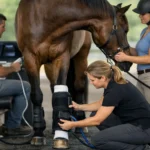
Cold therapy can be a useful natural way to support a tendon that is warm after exercise or has recently been strained. Cold hosing, ice boots or a controlled cold-water routine may help manage heat and temporary inflammation in the early stages.
Timing matters. In an acute injury, follow your vet’s advice on frequency and duration rather than relying on a standard routine. Avoid applying intense cold directly to bare skin for too long, and do not use cold care as a reason to continue exercise when the leg is showing warning signs.
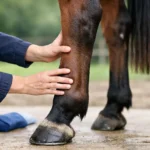
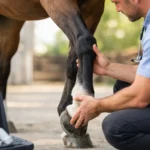
After routine hard work, checking both front and hind legs before and after cooling can help you learn what is normal for your horse. Compare one side with the other, using the back of your hand to feel for unusual warmth.
Support circulation without adding impact
Good circulation supports the body’s natural repair processes, but a healing tendon should not be challenged by unnecessary concussion. Gentle, vet-approved walking is often part of rehabilitation because it encourages controlled loading and movement through the limb.
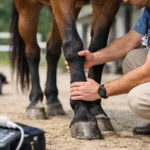
Drug-free therapies may also have a place in a daily care routine. The Horse Tendon Treatment pad combines targeted vibration therapy and acupressure in a portable treatment designed to support circulation, ease stiffness and provide comfortable tendon care at the stable. It is a practical complement to veterinary and physiotherapy-led rehabilitation, not a substitute for either.
The benefit of a home-use therapy is consistency. When a horse needs weeks or months of careful management, having a simple, non-invasive way to support daily comfort can make the routine easier to maintain.
Feed for healthy tissue, not for marketing promises
There is no supplement that can repair a damaged tendon on its own. Tendon healing depends on time, controlled loading and the right clinical plan. However, a balanced diet helps provide the building blocks needed for general health and tissue repair.
Start with good-quality forage, adequate protein and a vitamin and mineral intake suited to your horse’s age, workload and grazing. Horses on restricted turnout, poor grazing or very limited rations may need their diet reviewed by a qualified equine nutritionist.
Avoid assuming that more supplements are better. Some products make ambitious claims, but evidence and quality vary widely. If you use a joint or tendon supplement, choose it as part of a balanced feeding plan, check that it does not duplicate existing vitamins and minerals, and give it realistic expectations.
Weight management deserves particular attention. Extra bodyweight increases the load carried by every leg, while a horse that loses too much condition during box rest may lack the muscle needed to return to work safely. Aim for steady condition, not rapid change.
Keep hoof balance and surfaces in view
The hoof and tendon work as part of the same system. Poor balance, delayed shoeing or an unsuitable trim can alter how forces travel up the limb. Regular farrier care is therefore not separate from tendon support – it is part of it.
Discuss the rehabilitation plan with your farrier where appropriate. Some horses may need temporary shoeing changes recommended by the vet to support comfort or alter loading. These decisions should be individual, as what helps one injury may not be suitable for another.
Think carefully about footing too. Hard ground can increase concussion, while deep, loose or holding surfaces may place extra strain on tendons and ligaments. During a return-to-work programme, choose level, predictable ground and save demanding surfaces for when your horse has regained the strength to cope.
Build a controlled return to work
A tendon that feels cool and looks settled is encouraging, but it is not a green light to resume normal exercise overnight. Healing tendon fibres need progressive loading to become more organised and resilient. The key word is progressive.
Your vet may use scans at different stages to assess how the tendon is healing and decide whether work can increase. A typical plan often begins with short periods of walking, then gradually adds time, trot work and eventually more demanding exercise. The exact timetable depends on the tendon involved, the severity of injury and the individual horse.
Keep a simple record of exercise, turnout, leg temperature and any changes you notice. This is particularly valuable where more than one person cares for the horse. A clear written routine prevents well-meaning but inconsistent management.
Do not judge progress only by enthusiasm. Many horses feel ready to do more long before their tissues are ready. Calm, controlled work is an investment in the months ahead.
Know when natural care is not enough
Natural daily support is valuable, but it must never delay veterinary attention. Contact your vet promptly if you see any of the following:
- new or increasing heat, swelling or pain in the tendon area
- lameness, shortened stride or reluctance to turn
- a thickened, bowed or uneven appearance to the tendon
- deterioration after an increase in exercise or turnout
Early assessment can make a meaningful difference. Ultrasound imaging may be needed to identify the extent and location of damage, even when external swelling appears minor. The sooner you understand what you are managing, the safer your decisions about rest and rehabilitation will be.
Prevention starts after every ride
Not every tendon problem is avoidable, but daily habits can reduce unnecessary risk. Warm up patiently before faster work, cool down properly afterwards and increase fitness in small steps rather than sudden leaps. Make time to inspect legs when grooming, especially after jumping, galloping, travelling or working on challenging ground.
For performance horses, planned recovery should be treated as part of training, not as time lost from it. For leisure horses, the same principle applies: an occasional demanding ride can still overload an unprepared horse. Match the work to the horse in front of you, their fitness and the conditions underfoot.
Your horse does not need an elaborate routine to be well cared for. They need observant handling, sensible exercise and steady support when their legs have worked hard. Those quiet minutes spent checking, cooling and caring for the tendons can protect far more than the next ride – they can help preserve the confidence and soundness you both depend on.