
A tendon injury changes the whole rhythm of the yard. One scan result, one warm leg, one uneven step, and suddenly every turnout decision, every ridden plan and every week ahead needs rethinking. A sensible equine tendon rehab protocol gives that uncertain period some structure. More importantly, it helps you protect healing tissue without leaving your horse stuck in a cycle of rest, stiffness and repeated setbacks.
Tendon recovery is rarely quick. That is one of the hardest parts for owners and riders to accept, especially with horses that look bright, feel fresh and seem ready to do more long before the tendon truly is. The surface signs can improve well ahead of the deeper repair process. That is why a good protocol is never just about waiting. It is about controlled loading, close observation and daily support that fits real stable life.
Why an equine tendon rehab protocol needs structure
Tendons have a limited blood supply compared with many other tissues, so they heal slowly. Early on, the body lays down repair tissue, but that tissue is not automatically strong, well organised or ready for normal work. If loading is introduced too aggressively, fibres can be disrupted before they mature. If movement is restricted for too long, the tendon and surrounding structures can become stiff and deconditioned.
That balance is where rehabilitation often succeeds or fails. Horses need enough support to stay comfortable and mobile, but not so much freedom that healing tissue is overloaded. They also need consistency. Sporadic rest followed by enthusiastic exercise at the weekend is rarely helpful. A measured routine, adjusted with veterinary input and backed by regular reassessment, tends to produce better long-term outcomes.
The stages of an equine tendon rehab protocol
No protocol suits every horse or every injury. A mild strain in a leisure horse is different from a significant core lesion in a competition horse. Age, temperament, previous injury, limb conformation and management all matter. Even so, most rehabilitation plans move through the same broad stages.
Stage one: protect and settle the injury
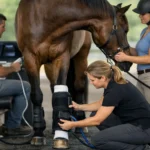
In the early phase, the priority is to calm inflammation, reduce strain on the tendon and prevent further damage. This usually means a period of box rest or very restricted movement, depending on veterinary advice. Cold therapy may be used initially, and your vet may recommend pain relief, bandaging or other short-term measures.
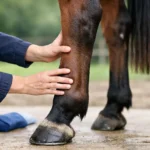
This is also the point where routine matters most. Check the leg daily for heat, filling, sensitivity and changes in digital pulse if that is part of your normal assessment. Keep notes. It sounds simple, but written records help you spot trends that memory can miss.
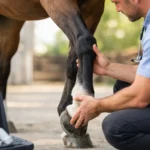
Gentle supportive therapies can be helpful once your vet is happy for them to be introduced. Many owners want a way to do something constructive during the slow early weeks, and this is where daily use of the Horse Tendon Pad begins. Targeted vibration therapy and acupressure, used appropriately, can help encourage circulation to the damaged area. This reduces swelling and eases stiffness and pain, making daily management more comfortable without adding mechanical stress through exercise.
Stage two: controlled walking
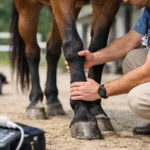
Once the acute phase has settled and your vet advises progression, walking usually becomes the foundation of rehab. Use the Horse Tendon Pad for 20 minutes before the walk. The increase in circulation to the tendon will make your horse feel more comfortable and less stiff to get moving. A horse may begin with only a few minutes of in-hand walking on a firm, even surface, then build gradually over weeks. If the area around the tendon begins to fill after the exercise, use the pad later in the day to help reduce the swelling over night.
Walking matters because controlled load encourages better fibre alignment. It also helps maintain joint mobility and muscle function. The challenge is resisting the temptation to move on too quickly when the horse appears sound. Soundness at walk is encouraging, but it is not proof that the tendon is ready for sharp increases in work.
At this stage, consistency is more valuable than ambition. The same route, similar footing and a calm handler often produce better results than constantly testing what the horse can manage. If your horse is excitable, management changes may be needed to keep movement controlled and safe.
Stage three: progressive ridden work or increased exercise
After follow-up assessment, some horses move from in-hand work to ridden walking and then carefully planned trotting. Others stay in hand for longer. It depends on the severity and location of the injury, scan findings and how the horse has responded so far. Continue with your routine of applying the Horse Tendon Pad prior to exercise, and again later in the day if the area swells slightly.
This is often the riskiest stage emotionally because confidence starts to return. Owners feel hopeful, horses feel stronger and schedules start to look more normal. Yet the tendon is still remodelling. Sudden increases in circles, deep surfaces, schooling intensity or turnout exuberance can undo months of careful work.
A better approach is to progress one variable at a time. Increase duration before intensity. Add trot before introducing more demanding schooling. Choose level, predictable ground. Keep sessions boring if necessary. In tendon rehab, boring is often productive.
Stage four: return to function and ongoing prevention
Even when a horse is back in regular work, tendon management should not stop. Previously injured tendons can remain vulnerable, particularly if the original cause has not been addressed. Poor footing, repeated fast work, fatigue, shoeing imbalances or insufficient recovery time can all contribute to recurrence.
That is why the final stage is really about long-term protection. Many owners build daily tendon care into their routine after exercise, during periods of hard work or at the first sign of tightness. This is especially sensible for performance horses and older horses, where prevention is often far easier than starting rehabilitation all over again. This is where the Horse Tendon Pad comes into its own. Use it as part of your daily stable routine. Put it on the tendon in the morning when feeding or mucking out, and the same in the evening. Prevention is part of living with a previously damaged tendon.
What owners often get wrong
Most mistakes in tendon rehab come from understandable intentions. Some owners do too much because the horse looks well. Others do too little because they are frightened of causing damage. Both approaches can create problems.
The aim is not complete inactivity for months unless your vet specifically requires it. Nor is it a rapid push back to normal work because swelling has gone down. Tendons respond to load, but the load has to be appropriate and gradual. Surface choice matters, turnout decisions matter and daily fluctuations matter too.
Another common issue is focusing only on exercise minutes while ignoring comfort between sessions. A horse that stands stiffly after box rest, struggles with reduced circulation or carries low-grade discomfort may not cope as well with rehab exercise as the timetable suggests. Supporting the tendon between walks and after work can improve the quality of the overall programme.
Daily support that fits a real stable routine
Rehabilitation plans often look tidy on paper and messy in practice. Horses get fresh. Yard schedules change. Owners juggle work, weather and limited daylight. For a protocol to work, it has to be realistic enough to maintain.
That is why simple, repeatable support tends to be most useful. A portable tendon treatment pad can be worked into daily care without turning rehab into a complicated clinical process. Used alongside veterinary and physiotherapy guidance, it offers a practical way to support circulation, reduce stiffness and provide regular therapeutic input at home or on the yard.
For many owners, that matters as much as the theory. If a therapy is awkward to set up, difficult to transport or unrealistic to use consistently, it often gets dropped. A straightforward system is far easier to stick with, which is exactly what tendon rehab demands.
When to pause and reassess
Progress in tendon healing is rarely perfectly linear. Some horses cope well with each increase. Others need more time at one stage before moving on. If heat returns, filling increases, the horse feels less comfortable, or behaviour changes suggest discomfort, it is worth pausing and seeking professional advice rather than pressing on.
This is not failure. It is sensible management. A short adjustment early on is usually easier than dealing with a full relapse later. The strongest rehabilitation plans leave room for that flexibility.
A calmer way to approach tendon recovery
An effective rehab plan is not about doing everything at once. It is about doing the right things, steadily, for long enough to give the tendon the best chance to heal well. Veterinary imaging, controlled exercise and professional guidance remain central, but daily comfort and circulation support also play an important role.
That is where Horse Tendon Treatment fits naturally – not as a replacement for clinical care, but as an easy, non-invasive addition that helps owners stay proactive throughout recovery and beyond. When the process feels long, practical support you can use every day can make a real difference to both confidence and outcome.
The best protocol is the one your horse can progress through safely, with fewer setbacks and more consistency, one ordinary day at a time.