
A horse can finish a perfectly ordinary schooling session looking comfortable, only to have a puffy tendon area when the boots come off. It is understandable to worry and ask, why do horses get tendon filling? Filling is common, particularly in hard-working horses, but it is not something to dismiss as simply part of the job. It is a sign that fluid has collected in or around the lower leg and that the tissues may need closer attention.
The key is to assess the whole picture: where the swelling sits, whether there is heat or pain, whether your horse is moving freely, and whether the leg changes after rest. Early, calm action gives you the best chance of protecting comfort and long-term soundness.
What tendon filling actually means
“Tendon filling” is a stable-yard term rather than a precise diagnosis. It usually describes soft or firm swelling around the back or sides of the cannon bone, often involving the tendon sheath – the fluid-filled structure that allows the flexor tendons to move smoothly.
A small amount of filling may appear after exercise and reduce by the next morning. This can happen when circulation and fluid movement have increased during work, especially if a horse then stands in for several hours. In other cases, swelling is linked to irritation in the tendon, tendon sheath, ligament or surrounding soft tissue. The appearance may be similar, but the significance is very different.
That is why comparing both front or both hind legs is useful. A leg that is suddenly fuller than its matching leg, particularly if it is warm or sensitive, deserves prompt investigation.
Why do horses get tendon filling after exercise?
Exercise places repeated load on tendons. These structures act like strong, elastic springs, storing and releasing energy with every stride. They are remarkably efficient, but they have a limited blood supply and can take time to recover from strain. When workload exceeds what the tissues are currently conditioned to manage, the body may respond with inflammation and extra fluid.
Fast work, jumping, deep or uneven going, tight turns and a sudden increase in schooling intensity can all raise tendon stress. So can long periods on firm ground, particularly for horses returning to fitness. A horse may cope well with one demanding session, then develop filling after several days of accumulated work.
Standing still also plays a part. Movement helps the lower leg circulate fluid. After turnout, travel, box rest or an overnight period in the stable, some horses develop soft, cool swelling often called stocking up. This may improve with gentle walking. Even so, do not assume all filling is harmless merely because it appears after standing in.
Conformation, age, previous injury and shoeing can influence risk too. A horse with an old tendon injury may be more prone to recurrent filling, while an older horse may have less resilient tissues. Poorly fitting boots, knocks in the field, a wound or a skin infection can also create swelling that is mistaken for routine tendon filling.
The difference between routine filling and a warning sign
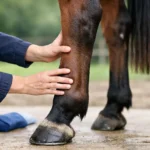
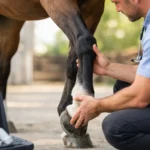
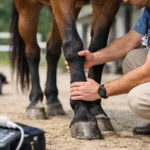
No owner can diagnose a tendon injury by sight alone, but a consistent leg-check routine helps you spot when professional advice is needed. Run clean hands down each leg before and after work, learning what is normal for your horse. Check the tendon area as well as the fetlock and the sides of the cannon bone.
Filling that is cool, soft, equal on both legs and settles with quiet movement may be related to standing or workload. It still calls for sensible management, especially if it keeps returning. Repeated filling suggests that recovery, turnout, fitness or the training plan may need adjusting.
Contact your vet promptly if the swelling is new, one-sided, hot, painful, firm, rapidly increasing or accompanied by lameness. Also seek advice if your horse shortens the stride, resists turning, feels unwilling to work, has a wound, or the filling does not reduce as expected. Do not ride through these signs in the hope that the leg will “work out”. Continuing to load an injured tendon can turn a manageable problem into a longer rehabilitation.
Your vet may recommend examination, ultrasound scanning or further assessment to identify the structures involved. This matters because a tendon lesion, tendon sheath inflammation and simple stocking up require different decisions about exercise and care.
Practical daily care for tendon health
The best tendon care is consistent rather than dramatic. Build changes in work gradually, allowing time for tendons to adapt to faster paces, jumping or firmer seasonal ground. After a demanding session, allow your horse to walk properly before returning to the stable. Controlled movement supports circulation without adding unnecessary strain.
Turnout can be beneficial for many horses because gentle, regular movement prevents prolonged immobility. However, it depends on the individual horse, the field conditions and veterinary guidance. A horse on restricted exercise after a confirmed injury needs a carefully managed plan, not a one-size-fits-all turnout decision.
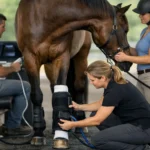
Cooling may be useful after hard work or in the early stage of an acute injury, but it should be used thoughtfully. Follow your vet’s advice on duration and method, particularly where heat, pain or significant swelling is present. Bandaging can also be appropriate in some circumstances, but incorrect application can cause pressure problems, so it should only be used by someone competent to do so.
Keep a simple record when filling appears. Note the work completed, going, travel, turnout, heat, sensitivity and how the leg looks the following morning. Patterns become much clearer over a few weeks, giving your vet, farrier, physiotherapist and trainer better information when decisions need to be made.
Supporting recovery without adding stress
Tendon tissue heals slowly. Even when swelling has gone down and a horse looks sound, the internal fibres may still be remodelling. This is the stage when owners understandably want to get back to normal, yet patience is often what protects the result.
A recovery plan should combine veterinary direction with controlled exercise, appropriate farriery, sensible surfaces and regular monitoring. Complementary, non-invasive care can fit well around that plan when it is used as support rather than a substitute for diagnosis. Targeted vibration therapy and acupressure, for example, may help encourage circulation and ease post-exercise stiffness as part of a calm daily routine.
Horse Tendon Treatment is designed for this practical role: a portable, drug-free pad that can be used at home to support tendon comfort and recovery alongside veterinary and physiotherapy care. It is particularly helpful for owners who want a straightforward way to give hard-working legs regular attention, whether their horse is returning from injury or managing an ongoing workload.
The trade-off is simple: supportive therapy can be valuable, but it cannot make an injured tendon safe to overload. If a leg is hot, painful or changing quickly, assessment comes first. Once the cause is understood, daily care has a clearer purpose.
When prevention matters most
Tendon filling is often your horse’s earliest request for a little more recovery time. It may be a response to a busy competition calendar, a change in ground conditions, time spent standing in, or a fitness level that has not yet caught up with the work being asked.
Take that message seriously, even when your horse is not lame. Check the legs, adjust the next session where needed and give the tissues a chance to settle. A few minutes of attentive tendon care after work can become one of the most valuable habits in protecting the horse you want to keep comfortable, capable and sound for years to come.