
A horse can look brighter, move more freely and feel ready to do more well before a healing tendon is prepared for the demands of work. That gap is exactly why owners need a plan to reduce reinjury risk. Tendons heal slowly, and early improvements in comfort do not necessarily mean the tissue has regained its former strength.
The aim is not to keep a horse wrapped in cotton wool. It is to rebuild confidence, movement and fitness in a controlled way, while protecting the tendon from the sudden overload that so often causes a setback. Good rehabilitation combines veterinary guidance with consistent daily management, careful observation and a willingness to slow down when the horse tells you something has changed.
Why tendon reinjuries are so common
A tendon injury can be frustrating because the visible signs may settle before the underlying repair process is complete. Heat and swelling may reduce, and the horse may appear sound in walk, yet the new tendon fibres are still organising and strengthening. Add too much speed, too much turnout exuberance or a sharp change of surface, and those fibres can be challenged beyond their current capacity.
Reinjury is rarely caused by one careless moment alone. It is more often the result of several small pressures building together: workload increasing too quickly, inconsistent exercise, poor footing, fatigue, inadequate recovery time or an underlying issue with balance and movement. A horse returning to competition work may also be carrying the mental freshness that makes them inclined to leap, pull or overreach before their body is ready.
This is why a structured programme matters. Your vet and, where appropriate, equine physiotherapist should set the rehabilitation plan around the injury location, severity, scan findings and the individual horse. Two horses with apparently similar tendon problems may need very different timelines.
Reduce reinjury risk with controlled progression
The most reliable principle in tendon rehabilitation is simple: increase one demand at a time. That might be duration, pace, surface challenge, hill work or the complexity of schooling. Changing several at once makes it difficult to know what the tendon tolerated and raises the chance of overload.
Build work in small, repeatable steps
Early controlled walking is often used to encourage appropriate loading without the force created by faster work. The exact starting point and duration must come from your veterinary team, but the value of consistency applies at every stage. A quiet, measured walk on suitable ground is usually more useful than irregular bursts of activity separated by days off.
As the programme progresses, keep a clear record of exercise. Note the time spent walking, trotting or cantering, the surface, the horse’s behaviour and any reaction afterwards. A diary prevents well-meaning guesswork, especially when more than one person is riding or handling the horse.
Do not assume a calm week means you can make up for lost time. If bad weather, a farrier appointment or a minor illness disrupts the plan, it is often safer to resume at a level the horse has already managed comfortably rather than jumping ahead. Patience feels slow on the yard, but it is far quicker than restarting rehabilitation after another injury.
Match the surface to the stage of recovery
Deep, holding going places extra strain on the lower limb, while hard, rutted or slippery ground can create sudden forces through the tendon. Even a normally sensible horse can lose balance when the footing is inconsistent.
Choose the most even, predictable surface available for controlled exercise. Be particularly careful with frozen ground, heavy mud, uneven tracks and fast work on firm summer going. As fitness improves, the horse will need gradual exposure to the surfaces relevant to their future job, but this should be planned rather than accidental.
Hills, circles and tight turns also increase demand. They have a place in conditioning for some horses, but timing matters. Introduce them only when they fit the programme and the horse is coping well with simpler work.
Make daily tendon checks part of stable routine
You know your horse’s legs better than anyone. A brief, calm check before and after exercise can identify a change early, when a reduction in work may prevent a larger problem.
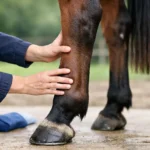
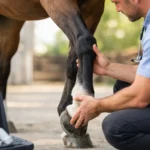
Run your hands down both legs and compare like with like. Look for warmth, puffiness, tenderness, a change in the tendon’s outline or reluctance to let you handle an area that is normally comfortable. Also notice how the horse moves out of the stable, turns in the yard and settles after work. Subtle stiffness, shortened steps or a change in temperament can be useful clues.
Checking should be practical rather than anxious. Legs can vary slightly with weather, turnout, travel and workload. What matters is a new pattern, a persistent difference or a reaction that does not resolve as expected. If you spot heat, swelling, lameness or any concerning change, stop progressing the work and contact your vet. Do not try to work through it in the hope that the horse will loosen up.
Support recovery between exercise sessions
Rehabilitation is not only about the minutes spent under saddle or in hand. The rest of the day shapes how the horse recovers. Comfortable, well-managed turnout can support normal movement and wellbeing, but turnout needs to suit the horse and their stage of rehabilitation. Some horses cope quietly in a small, familiar area; others may need a more controlled arrangement if they are likely to charge about, play hard or fence-walk.
Keep the horse at an appropriate body condition too. Extra weight increases the load on every stride, while inadequate nutrition can limit muscle maintenance and tissue repair. Forage, diet and any supplements should be considered with your vet or qualified equine nutritionist, particularly if the horse is on restricted grazing or reduced work.
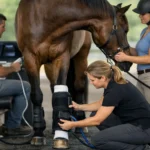
Hoof balance deserves equal attention. Small imbalances can alter loading through the limb, especially as the horse returns to more demanding exercise. Regular communication between your vet, farrier and therapist helps ensure the shoeing or trimming plan supports the wider rehabilitation goal.
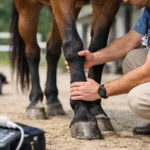
For owners who want a simple, drug-free addition to daily care, the Horse Tendon Treatment pad uses targeted vibration therapy and acupressure to support circulation, ease stiffness and provide gentle tendon care at home. It is designed to sit alongside, not replace, veterinary assessment, prescribed rehabilitation or professional physiotherapy.
Condition the whole horse, not only the injured leg
A recovering tendon is part of a whole moving body. Time off can reduce topline, core strength, joint mobility and general fitness. If the horse returns to their previous workload before those systems have caught up, they may compensate through the injured limb or overload another area.
As your professionals advise, build strength and coordination through appropriate straight-line work, gradual fitness training and schooling that encourages a balanced way of going. Poor posture, rushing and persistent crookedness are not simply training issues during rehabilitation. They can change how force travels through the limbs.
It is also worth considering why the original injury occurred. Was the horse fatigued at the end of a busy season? Did it happen after a change in surface, shoeing, workload or turnout? Is tack fit affecting movement? A useful return-to-work plan addresses these contributing factors rather than treating the injury as isolated bad luck.
Know when to pause rather than push on
A successful programme is responsive, not rigid. Some horses progress smoothly; others need more time at a particular stage. Age, injury history, temperament, conformation, discipline and the demands of the intended work all affect the right pace.
Pause and seek advice if you see renewed heat or swelling, unevenness, discomfort on palpation, a drop in performance or a change in stride. Be cautious after transport, unusually energetic turnout, a slip, a stumble or work on unexpectedly difficult ground. These events do not always cause damage, but they are sensible reasons to monitor the leg closely and avoid automatically increasing exercise.
Long-term soundness is built through ordinary, repeated decisions: a sensible surface, a measured increase in work, a hand on the tendon before and after exercise, and a plan that respects healing time. Give the tendon the consistency it needs now, and you give your horse a stronger chance of returning to the work they enjoy with confidence.