
You know your horse’s normal way of going. That is why horse leg stiffness after exercise often stands out straight away – the shorter step, the reluctance to turn, the slight resistance when moving off again after standing in the stable. Sometimes it settles with sensible management. Sometimes it is the first sign that tendons and soft tissues are under more pressure than they can comfortably handle.
Stiffness after work is not always a drama, but it should never be dismissed as nothing. Horses in regular work, whether they are competing, hacking, schooling or coming back into exercise, can all show stiffness for different reasons. The key is recognising what is temporary muscular fatigue and what may be pointing to irritation, overload or early tendon stress.
Why horse leg stiffness after exercise happens
The most straightforward cause is simple workload. A harder schooling session, firmer ground, increased jumping, long periods of travelling, or returning to work after time off can all leave a horse feeling tight afterwards. In these cases, the tissues have worked harder than usual and may respond with mild inflammation, fatigue and reduced flexibility for a short period.
But stiffness is not just about muscles. In horses, lower limb stiffness after exercise can also relate to tendons, ligaments, joints and circulation. Tendons in particular cope with enormous force during movement. If they are repeatedly loaded without enough recovery, they can become irritated before there is obvious swelling or lameness. That early stage matters, because catching strain early is always preferable to dealing with a larger injury later.
Age, fitness level and conformation can all play a part. Older horses may take longer to warm out of stiffness. Horses with previous tendon or ligament issues often need more careful management after exercise. Even fit competition horses can tighten up if their routine changes or their workload increases too quickly.
When stiffness is normal and when it is not
A horse that feels a little wooden the morning after an unusually hard session may simply need lighter work, turnout and time to recover. If the stiffness improves once the horse walks on, does not return repeatedly, and is not accompanied by heat, swelling or obvious discomfort, the cause may be relatively minor.
The concern rises when stiffness becomes a pattern. If your horse is regularly short behind or in front after routine work, takes longer and longer to loosen up, or feels uneven on circles or transitions, it is worth looking closer. The same applies if there is filling around the tendons, sensitivity to touch, or a change in performance that does not fit the horse’s usual behaviour.
It also depends on timing. Stiffness that appears immediately after exercise may suggest acute strain or overload. Stiffness that shows up the next day can reflect a delayed tissue response. Neither should be ignored if it keeps happening.
Tendons and lower leg stiffness after exercise
Tendon trouble often develops quietly. A horse does not always go from sound to obviously lame in one day. There can be a stage where the tendon is coping, but not comfortably. That may show up as mild post-exercise stiffness, subtle heat, a cautious stride or an unwillingness to fully lengthen.
This is one reason lower leg care matters so much in horses with regular workloads. Tendons have a limited blood supply compared with muscle, which means recovery can be slower. Good circulation and consistent support become especially important where there has been previous strain, repetitive schooling on similar surfaces, or a busy competition schedule.
For owners and yard managers, the practical question is not only what is wrong, but what can be done day to day to support better recovery. That is where routine matters more than one-off fixes.
What to do if your horse is stiff after work
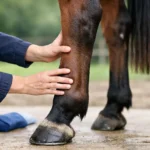
Start with the basics. Look carefully at the leg, compare both sides, and feel for heat, puffiness or tenderness. Watch the horse walk away and back on a firm, level surface. Think about what has changed recently – footing, workload, shoeing, turnout, travel or intensity of work. Quite often, the answer sits in that recent history.
If the stiffness is mild and there are no red flags, it usually makes sense to reduce the workload for a short period rather than push through it. Gentle movement is often more helpful than complete confinement for simple post-exercise tightness, provided the horse is comfortable enough to move normally. Turnout, a calmer schedule and careful warm-up and cool-down can all help.
Cold therapy may be useful straight after harder work when there is concern about heat or inflammation. Longer term, however, many horses benefit from therapies that support circulation and tissue comfort as part of their regular routine, especially if they are prone to filling, post-work tightness or recurring lower limb sensitivity.
Managing horse leg stiffness after exercise over time
If stiffness is becoming a regular issue, daily management needs attention. One hard session is rarely the whole story. More often, it is the accumulated effect of work, recovery, footing and existing wear and tear.
Warm-up is one of the easiest areas to improve. Some horses need more time than riders think, particularly older horses and those with previous soft tissue strain. Ten rushed minutes before more demanding work may not be enough. A proper warm-up gives tendons and supporting structures time to adapt to loading.
Cooling down matters too. Stopping abruptly after intense work can leave the lower limbs under strain. A thoughtful cool-down helps the horse return gradually to a resting state and may reduce post-exercise tightness.
Then there is the bigger picture. Regular assessment of surfaces, balanced work, sensible fitness progression and support between sessions all influence whether a horse stays comfortable. This is where many owners now look for drug-free, non-invasive ways to support tendon care at home rather than waiting until a problem becomes harder to manage.
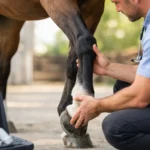
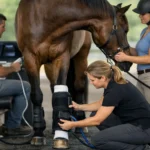
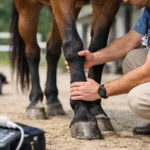
Targeted vibration therapy and acupressure can fit naturally into that approach. Used consistently, they can help support circulation, reduce stiffness and encourage a more comfortable recovery routine after exercise. For horses with a history of tendon strain or those in ongoing work, that kind of practical daily support can make a real difference to how the legs cope over time.
When to call your vet
There is a point where home management is not enough. If stiffness is significant, if there is clear swelling or heat, if your horse is lame, or if the issue keeps returning despite reduced work, veterinary advice is the right next step. The same applies if there has been a sudden deterioration after exercise or if the horse reacts when the tendon area is touched.
Early assessment can prevent a small issue becoming a long rehabilitation. Tendon injuries are notorious for long healing times, and many owners know the frustration of losing months because the first signs were too easy to brush aside.
Supportive therapies still have a role here, but they should sit alongside professional guidance, not replace it. The best outcomes usually come from combining accurate diagnosis with steady, consistent day-to-day care.
Building a better recovery routine
The horses that stay soundest over time are rarely managed by luck alone. They tend to have routines that respect workload, recovery and early warning signs. If your horse commonly feels stiff after exercise, that is useful information. It tells you the legs may need more support, more recovery time, or a closer look at how the current routine is working.
For many owners, the goal is not just reacting to injury. It is reducing the chance of one. A practical tendon care routine can help support mobility, comfort and confidence, whether your horse is in rehabilitation, back in work, or simply doing a regular job every week. Brands such as Horse Tendon Treatment are built around that need – offering a simple, portable way to add targeted support without complicating stable life.
The right response to stiffness is not panic. It is attention, consistency and a willingness to act early. A horse that feels a little tight after exercise is often giving you a chance to intervene before a manageable issue becomes a much bigger one.