
A horse can look comfortable in walk, seem brighter in themselves, and still be a long way from true recovery. That is what makes equine tendon healing so challenging. Tendons do not repair quickly, and when a horse starts moving more freely it is easy to assume the worst has passed. In reality, the tissue may still be weak, stiff and vulnerable to another setback.
For owners, riders and yard managers, that uncertainty is often the hardest part. You want to do the right thing, support healing properly, and avoid the cycle of rest, re-injury and longer time off. The good news is that a sensible daily routine can make a real difference. While no single product or technique can shortcut biology, the right combination of veterinary guidance, controlled exercise and targeted daily support can improve comfort, circulation and long-term soundness.
Why equine tendon healing takes so long
Tendons are built to cope with huge forces, but they have a limited blood supply compared with muscle. That matters because healing depends on nutrients, oxygen and the body’s ability to rebuild damaged fibres. When a tendon is strained or injured, repair tends to be slow and the new tissue is rarely identical to the original structure.
Instead of laying down perfectly aligned elastic fibres, the body often produces scar tissue. That tissue can help bridge damage, but it is usually less flexible and less resilient. This is one reason horses can appear improved before the tendon is truly ready for normal work. The surface signs may be encouraging, while the deeper tissue still needs more time and careful management.
The type of injury also matters. A mild strain after hard work is not the same as a significant tendon lesion diagnosed on scan. Age, fitness, conformation, workload and previous injury history all affect recovery too. There is no honest one-size-fits-all timeline, which is why realistic expectations are so important from the outset.
What actually supports tendon repair
Successful recovery usually comes from consistency rather than dramatic interventions. In the early stages, your vet may recommend rest, cold therapy and careful monitoring to settle inflammation and protect the area. As healing progresses, controlled movement becomes essential. Too much rest for too long can leave tissues weaker and stiffer, while too much exercise too soon can undo weeks of progress.
This balancing act is where many owners feel stuck. You are trying to support healing, reduce discomfort and keep the horse comfortable enough to move well, without overdoing it. Daily care matters here. Good stable management, sensible exercise plans and supportive therapies can all help create better conditions for recovery.
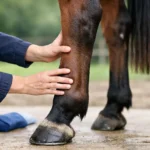
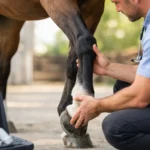
Circulation is one of the key pieces. Healthy blood flow supports tissue repair and helps reduce the heavy, tight feeling that often follows strain or repetitive workload. Comfort matters just as much. A horse that feels stiff may move less freely, compensate elsewhere, or load the limb unevenly. Supporting mobility during recovery is not about forcing progress. It is about helping the horse move as naturally and comfortably as possible within the plan set by your vet or physio. The Horse Tendon Pad is designed to help with these important elements of the recovery process, as well as reduce the pain your horse is feeling (https://horsetendontreatment.com/using-the-pad)
Equine tendon healing and the role of daily therapy
One of the biggest mistakes in tendon management is only responding when there is an obvious problem. Tendons are under pressure every day in ridden work, schooling, competition and even turnout. By the time heat, swelling or unevenness appears, the tissue has often been under strain for some time.
That is why daily therapy can be so useful, both during recovery and as part of prevention. A non-invasive support method that is simple to use around the yard is often easier to stick with than treatments that are time-consuming, complicated or only available through appointments.
Targeted vibration therapy and acupressure are increasingly valued because they fit that practical need. Used appropriately, they can help stimulate circulation, ease stiffness and support comfort in the tendon area without adding drugs or invasive procedures. For many owners, that makes them a sensible addition to a wider rehabilitation plan.
It is worth being clear about the trade-off. Supportive therapy is not a replacement for diagnosis, scanning or professional advice when a tendon injury is suspected. It works best as a complement to veterinary and physiotherapy care, not instead of it. But when used consistently, it can help bridge the gap between occasional appointments and the reality of everyday management.
What a good recovery routine looks like
A strong tendon recovery plan usually looks quite ordinary from the outside. It is built on repetition, patience and close observation. You are checking for changes in heat, filling and sensitivity. You are following an exercise schedule rather than guessing. You are resisting the temptation to rush because the horse feels better one day.
In practical terms, that often means keeping the horse on a structured routine, using supportive therapies regularly, and making small adjustments based on how the limb presents. Some horses benefit from therapy before movement to help loosen stiffness. Others respond well afterwards, particularly when the tendon has been under workload and you want to support circulation and recovery.
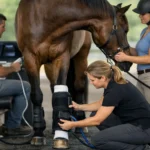
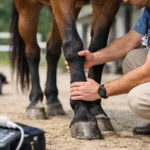
This is where a portable tendon treatment pad can be especially helpful. Because it is straightforward to apply and suitable for frequent use, it is much easier to build into normal stable life. You are not trying to create a complicated rehab protocol every day. You are adding a focused, horse-specific treatment that supports the tendon area in a calm, manageable way.
For busy owners and yards, that simplicity matters. The best routine is the one you can maintain properly over weeks and months, because tendon healing rarely runs on a short clock.
Preventing repeat strain matters as much as healing
One reason tendon injuries are so frustrating is the risk of recurrence. Even after a horse returns to work, the repaired tissue may remain more vulnerable than it was before. That does not mean every horse will break down again, but it does mean aftercare deserves just as much attention as the initial recovery phase.
Prevention is not glamorous. It is careful fitness work, sensible surfaces, good warm-up habits and paying attention when the horse feels slightly tight rather than obviously lame. It is also about supporting tendons after exercise, especially in horses with regular workload, previous tendon trouble or naturally high movement demands.
A daily care approach can help here. If you can reduce stiffness, encourage healthy circulation and support the limbs after work, you are giving the horse a better chance of coping with repeated stress. That is valuable for competition horses, but it matters just as much for leisure horses, older horses and those returning to work after time off.
When to seek more help
If a tendon area is hot, swollen, painful or consistently thickened, veterinary assessment should come first. The same applies if your horse becomes lame, shortens stride or shows repeated signs that something is not right. Early diagnosis usually gives you a clearer treatment plan and a better chance of managing the issue properly.
Even during a straightforward recovery, progress is rarely perfectly linear. Some days will look better than others. Ground conditions change, workloads vary, and horses have a habit of testing the plan. That does not always mean something has gone badly wrong, but it does mean paying attention.
The most effective owners are usually the ones who stay calm and consistent. They do not ignore problems, but they also do not chase quick fixes. They focus on supportive, repeatable care that helps the horse feel and move better over time.
That is the thinking behind the Horse Tendon Pad. Owners want something safe, practical and easy to use at home – a therapy option that fits alongside professional care and gives them a more active role in the horse’s recovery and protection.
Tendon healing asks for patience, but it should not leave you feeling powerless. The small things you do every day, especially the ones that support comfort, circulation and steady movement, are often the ones that count most when you are trying to protect your horse for the long term.