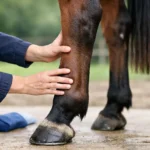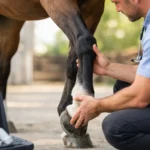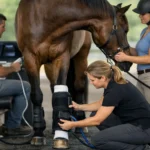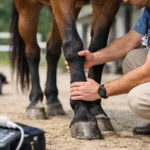

A warm, puffy tendon after schooling, galloping or a hard day’s hunting is not something to simply watch and hope will settle. Tendons carry huge forces with every stride, and even a seemingly minor change in temperature, thickness or sensitivity can be an early warning sign. The best ways to reduce tendon swelling begin with prompt, sensible care – but they also depend on understanding why the swelling has appeared in the first place.
For horse owners, the challenge is that tendon injuries can be slow to heal and easy to aggravate. Acting early, following veterinary advice and building supportive daily care into the stable routine gives your horse the best chance of a comfortable, controlled recovery.
First, treat sudden tendon swelling as a veterinary concern
Swelling is a symptom, not a diagnosis. It may follow a minor knock, an overloaded session, a wound, infection, tendon strain or damage to the tendon fibres themselves. The appearance alone cannot tell you how serious it is.
If your horse develops new tendon swelling, reduce exercise immediately and contact your vet for guidance. They may recommend an examination and ultrasound scan to assess the tendon structure. This matters because a horse can sometimes look sound at walk while still having a significant injury that needs careful management.
Seek urgent veterinary advice if there is marked heat, pain, lameness, a rapid increase in swelling, a cut near the tendon, discharge, fever, or reluctance to bear weight. Do not massage a hot, acutely painful tendon or attempt to work the swelling away. Early mistakes can extend the recovery period considerably.
The best ways to reduce tendon swelling in the first 48 hours
The first couple of days are usually about protecting the area and managing inflammation, rather than trying to rush a return to work. Your vet’s plan should always take priority, especially where an injury is suspected.
Stop work and control movement
Continuing to exercise on a swollen tendon can place damaged fibres under further strain. Your vet may advise box rest, restricted turnout, or controlled walking, depending on the cause and severity. There is no single rule for every horse: complete rest may be appropriate initially, while another horse may need carefully prescribed movement to prevent stiffness and support circulation.
Keep the routine calm and practical. A settled horse in suitable accommodation is less likely to spin, rear or make the injury worse. If box rest is required, use safe enrichment and follow professional guidance on diet and management.
Use cold therapy carefully
Cold hosing or cold packs are commonly used during the early phase of a fresh injury to help limit heat and swelling. A controlled period of cooling after work may also be useful for horses with tendons that are prone to filling.
Avoid applying extreme cold directly to the skin for too long. Use a barrier where needed, keep sessions sensible, and check the leg throughout. Your vet or physiotherapist can advise on duration and frequency for your horse’s condition. Cold therapy can be helpful in the acute stage, but it is not a substitute for diagnosis, rest or a rehabilitation plan.
Apply support only when advised
A correctly fitted stable bandage may be recommended to manage lower-leg filling and protect the limb. However, poor bandaging can create pressure points, uneven compression or additional heat. If you are not confident applying a bandage, ask your vet, physiotherapist or an experienced professional to show you.
Never use a bandage to conceal a problem before riding. A leg that fills repeatedly needs a reason, not just a cosmetic fix.
Look beyond the swelling itself
Once your vet has identified the likely cause, tendon care becomes more individual. A tendon recovering from an acute core lesion needs a different approach from an older horse with mild windgalls, or a competition horse whose legs become slightly puffy after travel.
Monitor both legs at the same time each day, ideally before exercise and after the horse has been standing in. Learn what is normal for your horse: the tendon’s outline, skin temperature, sensitivity and any natural asymmetry. Take photographs or make brief notes if you notice a change. This gives your vet useful information and helps you spot whether swelling is genuinely improving rather than merely changing from day to day.
Watch the whole horse too. Uneven shoeing, poor footing, fatigue, a sudden increase in work, inadequate warm-up, body condition and compensation for another injury can all increase tendon load. Reducing swelling without addressing the workload that caused it simply risks repeating the cycle.
Support circulation without irritating injured tissue
After the acute inflammatory phase has passed, the goal often shifts towards maintaining comfortable movement, supporting circulation and preventing stiffness while the tendon heals. This is where a consistent, low-impact routine can make a meaningful difference.
Controlled walking is commonly used during rehabilitation because tendons benefit from gradual, appropriately timed loading. The key word is controlled. Increasing duration or intensity too quickly can cause heat and swelling to return, even when a horse seems brighter. Follow the rehabilitation timetable set by your vet and adjust only with their approval.
Gentle, non-invasive therapies may also suit this stage of recovery and ongoing tendon maintenance. Targeted vibration and acupressure can be used to support local circulation and ease stiffness without medication or invasive treatment. The Horse Tendon Treatment pad is designed to make this type of daily support straightforward at home or in the yard, as a complement to veterinary and physiotherapy care rather than a replacement for it.
Avoid vigorous rubbing over an injured tendon, especially if it remains hot, thickened or tender. More pressure is not better. A recovering tendon needs calm, measured support and time to remodel.
Manage exercise, surfaces and recovery days
Tendons do not respond well to sudden changes. A horse returning to work after rest needs a gradual programme that builds fitness before speed, jumping, tight turns or deep going are introduced. Even a fit-looking horse may have tissues that are not ready for peak workload.
Keep an eye on surfaces. Deep, loose, rutted or very hard ground can increase strain, particularly for horses that are fatigued, unbalanced or carrying existing tendon changes. Sensible warm-up, progressive conditioning and appropriate recovery after intense sessions are practical forms of injury prevention, not optional extras.
After exercise, check the legs once the horse has cooled down. If there is new heat, filling or sensitivity, reduce the next session rather than pressing on. Catching small changes early is often far easier than managing a full setback.
Everyday habits that help prevent recurrent filling
A sound tendon-care routine is built around consistency. Keep feet well balanced through regular farriery, maintain an appropriate bodyweight, and ensure your horse has adequate turnout or prescribed movement when possible. Long periods of standing still can contribute to lower-leg filling, particularly in stabled horses, although persistent or one-sided swelling should still be investigated.
Travelling can also leave legs puffy, especially after a long journey. Give your horse time to settle, offer water, walk in hand if appropriate and inspect the legs before and after travel. If your horse regularly fills after transport, discuss it with your vet rather than assuming it is harmless.
Nutrition supports the wider recovery picture too. A balanced diet that meets your horse’s needs for forage, protein, vitamins and minerals helps maintain healthy tissues, but supplements should not be treated as a quick cure for tendon damage. Ask a qualified professional before making major dietary changes, particularly during box rest.
When swelling appears to settle but the risk remains
The disappearance of swelling is encouraging, but it does not prove that a tendon has fully healed. Tendon fibres remodel slowly, and a horse may feel comfortable before the tissue has regained enough strength for normal work. This is why follow-up examinations and repeat scans are often part of a responsible rehabilitation plan.
Be patient with the final stages. It can be tempting to increase work once the leg looks clean, particularly before an event or during a busy season, but gradual progression protects the long-term future of the horse. A few extra weeks of careful management can be far less costly than another period of enforced rest.
Every warm tendon deserves attention, but calm, early action gives you something valuable: control. Check the leg, stop the work, involve your vet and make thoughtful daily care part of recovery. That steady approach is often the kindest way to help your horse return to comfortable, confident movement.