Superior and Inferior Check Ligament Injuries in Horses Explained

Check Ligaments: What You Need to Know – Part 1 of 3
- Superior and Inferior Check Ligament Injuries Explained (you are here)
- How Superior and Inferior Check Ligaments Heal
- A Team Approach to Recovery
Hearing the words “check ligament injury” after a scan can leave you with more questions than answers. Which check ligament? How serious is it? How long will it take? And what can you actually do each day to help? This guide explains the difference between superior and inferior check ligament injuries, how ligaments heal, and where the Horse Tendon Pad fits into a recovery plan led by your vet and physio.
What Are the Check Ligaments?
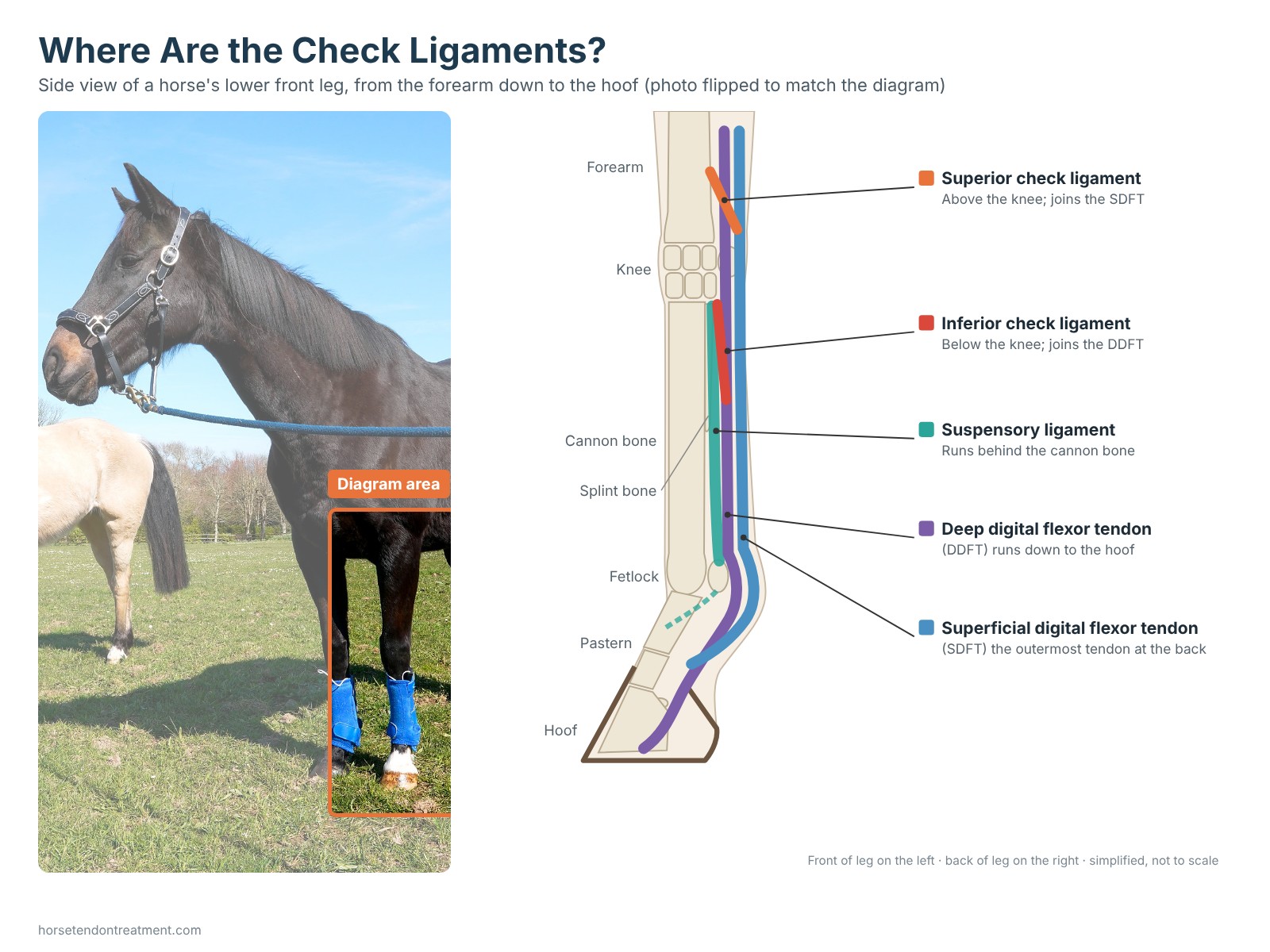
Each front leg has two check ligaments. Their job is to “check”, or limit, how far the flexor tendons stretch when the leg takes weight, which protects those tendons from overloading. The hind legs have them too, but injuries are far more common in the front legs.
The superior check ligament sits above the knee at the back of the forearm. It runs from the radius to the superficial digital flexor tendon.
The inferior check ligament sits just below the knee at the back of the upper cannon. It joins the deep digital flexor tendon and is the one that is injured more often.
Superior Check Ligament Injuries
Superior check ligament injuries are less common and can be easy to miss. Swelling may appear above the knee or around the back of the knee rather than down the cannon, and some horses show only mild or intermittent lameness. Your vet will usually confirm it with an ultrasound scan, and may also check the nearby carpal sheath, which can fill with fluid when this ligament is injured.
Inferior Check Ligament Injuries
Inferior check ligament injuries are seen more often, particularly in older horses, ponies and sport horses. Typical signs are heat and a firm swelling at the top of the cannon, just below the knee, sometimes with only slight lameness. Because this ligament sits close to the superficial digital flexor tendon, there is a risk that scar tissue sticks the two together during healing, which is one reason a carefully managed recovery matters so much.
How Check Ligaments Heal
Ligaments heal slowly because they have a relatively limited blood supply. Healing happens in three overlapping stages.
Stage One: Inflammation
For roughly the first one to two weeks, the body responds to the damage with heat, swelling and pain. Blood brings in the cells that clear away damaged tissue. Your vet will usually advise box rest, cold therapy and sometimes bandaging or medication at this point.
Stage Two: Repair
Over the following weeks, the body lays down new fibres to fill the damaged area. This early repair tissue is weaker than the original ligament and the fibres are laid down in a disorganised way, so the ligament is still vulnerable.
Stage Three: Remodelling
Over many months, the new fibres gradually line up along the direction of load and become stronger. Controlled, gradually increasing exercise is what guides this process. Too little movement and the tissue stays weak and stiff, too much too soon and it can tear again. This is why horse tendon recovery time is often measured in months rather than weeks.
How the Horse Tendon Pad Can Help
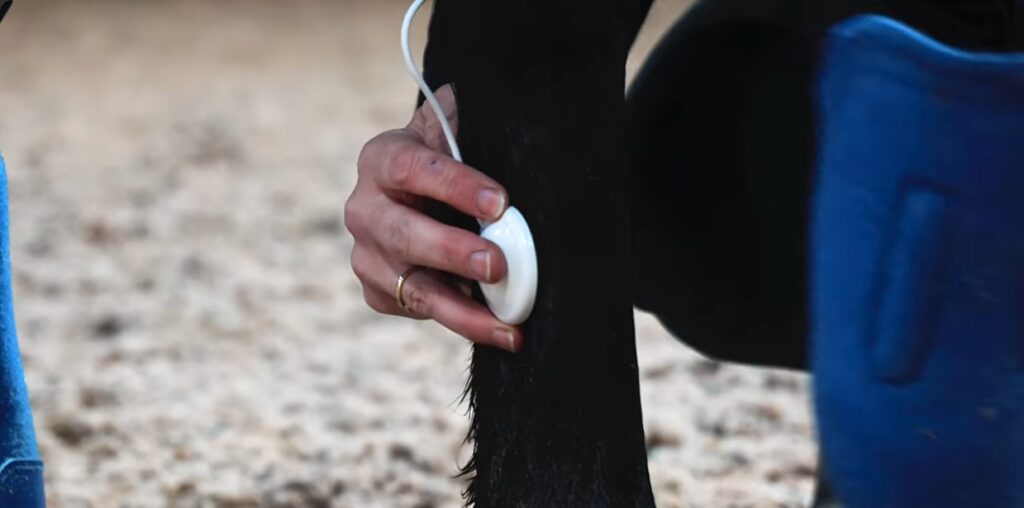
The Horse Tendon Pad combines gentle vibration therapy with acupressure. It is designed to increase blood flow to the area and help reduce pain, which can make movement easier and keep your horse more comfortable.
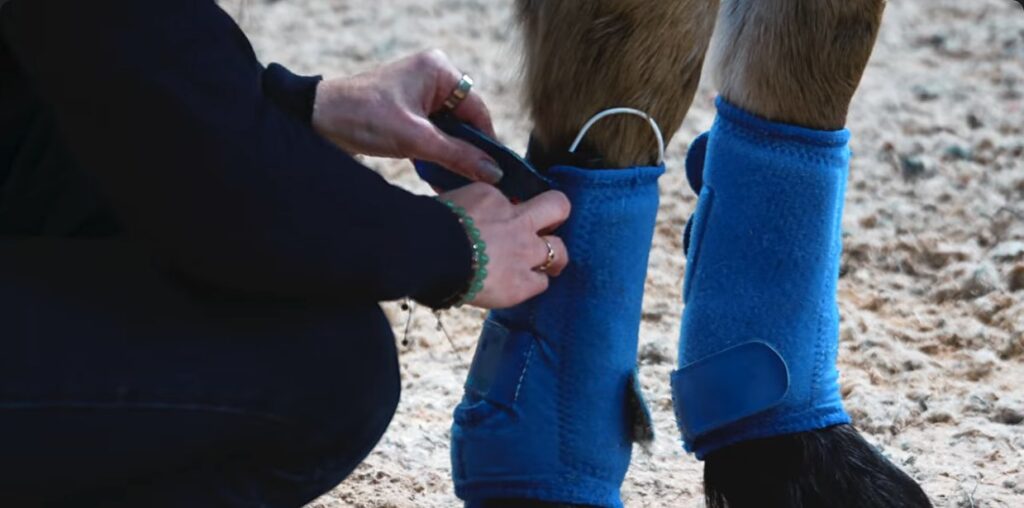
That matters for a ligament injury because good circulation brings oxygen and nutrients to tissue that has a naturally limited blood supply, and a more comfortable horse is easier to keep on a steady, controlled exercise programme. Used 2 to 3 times a day for 20 minutes, the pad fits around your normal yard routine, so you are doing something positive every day rather than simply waiting.
Once the early inflammation has settled and your vet is happy, the pad can be used throughout the repair and remodelling stages. It is also useful as a warm-up before exercise during the return to work.
Fitting the Pad Into Your Vet and Physio Plan
The pad is not a replacement for veterinary or physiotherapy care. It works best as part of a plan that includes:
- Your vet, who diagnoses the injury, scans it at intervals and decides when your horse can move to the next stage.
- Your physio, who helps keep muscles and joints working well and can advise on mobility and strengthening work.
- You, providing the daily care, controlled exercise and monitoring that make up most of the recovery.
Talk to your vet about when to start using the pad and share how your horse is responding at each check-up. For more on the day-to-day side, see our guides to check ligament rehabilitation and check ligament tear support options.
A Steady Path Back to Work
Whether your horse has injured the superior or inferior check ligament, recovery takes patience. Many horses do return to their previous work when the injury is caught early and the rehabilitation is not rushed. Combining good veterinary care, physio support and consistent daily input gives your horse the best chance of a strong, lasting recovery.
Next in the Series – Part 2: How Superior and Inferior Check Ligaments Heal →
Supporting Your Horse’s Recovery at Home
The Horse Tendon Treatment Pad is a drug-free, non-invasive way to support your horse’s legs between vet visits, alongside rest and controlled exercise.