
A hard-working horse can finish a session looking fresh, while its tendons are carrying the quieter effects of speed, surface, jumping, turning and fatigue. This guide to tendon care after exercise gives owners a practical way to make recovery part of the daily stable routine, rather than waiting for obvious stiffness or swelling to appear.
Tendon injuries can be frustrating because they are rarely a quick fix. Even a minor strain may require careful management over many months, with workloads adjusted and progress monitored closely. Consistent after-exercise care cannot replace veterinary diagnosis or a sensible training plan, but it can help you notice changes sooner and support comfort between rides.
Why tendon care matters after work
Tendons transfer the power generated by the muscles to the bones. In the lower limb, structures such as the superficial digital flexor tendon work particularly hard to absorb and release energy as the horse moves. Fast work, deep or uneven going, repeated jumping, tight turns and a sudden increase in workload can all place extra demand on these tissues.
The challenge is that a horse may not show a clear problem immediately. Heat, a slight thickening, sensitivity to touch or a shortened stride can develop later, sometimes after the horse has cooled down. This is why a calm check after exercise is so valuable. It gives you a regular baseline for what is normal for your horse.
Good care is not about treating every leg as injured. It is about responding appropriately to the work completed, the conditions underfoot and the horse in front of you. A fit horse on a gradual programme may need little more than a thoughtful cool-down and routine check. A horse returning from injury, competing regularly or working on firm ground may benefit from more deliberate recovery support.
Your guide to tendon care after exercise
Start before you reach for any treatment. Walk your horse until breathing has settled and the body has had time to cool gradually. Stopping abruptly after demanding work can leave muscles and lower limbs feeling tight, particularly in colder weather or after a long journey home from a show.
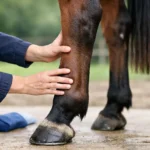
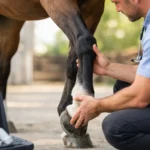
Once the horse is calm and dry enough to assess comfortably, run clean hands down each leg. Compare left and right rather than judging one leg in isolation. Feel for unusual warmth, swelling, a change in tendon shape or a reaction when gentle pressure is applied. Do this in the same order each time, ideally before and after work, so small differences are easier to spot.
If you find marked heat, swelling, pain, lameness or a clear change in the way your horse moves, stop training and contact your vet. Do not assume a leg is merely “filling” after exercise, particularly if the change is new or one-sided. Early assessment can prevent a small concern becoming a much longer rehabilitation problem.
Cool the legs when the workload calls for it
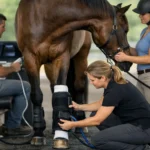
Cooling is a familiar part of equine aftercare for good reason. Cold hosing or carefully applied cold therapy may be useful after strenuous work, especially in warm weather or following fast exercise, jumping or work on challenging ground. The aim is to bring down excess surface heat, not to create an uncomfortable or overly aggressive routine.
Keep the process sensible. Use clean water, avoid leaving a horse standing in a draught while wet, and make sure the horse is supervised. The exact duration and method should reflect your horse, the weather and any veterinary guidance. Horses on an injury rehabilitation plan should follow the plan set by the vet or physiotherapist rather than a general stable routine.
Cooling alone is not a complete recovery strategy. It works best alongside sensible fitness, appropriate footing, correct shoeing or trimming, rest and a workload that progresses gradually.
Support circulation and relaxation after the initial check
Once you have checked that there is no acute concern, gentle recovery care can help maintain a comfortable routine. Light hand work around the surrounding soft tissues, careful leg washing and quiet time in the stable can all be useful where appropriate. Avoid deep or forceful massage directly over a tendon that is hot, sore or swollen.
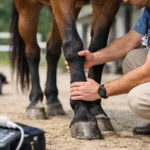
For horses that regularly cope with demanding work, non-invasive therapies can also fit neatly into after-exercise care. The Horse Tendon Treatment pad combines targeted vibration therapy with acupressure in a simple, portable format designed for everyday use. It can be used as a practical complement to veterinary and physiotherapy support, helping owners provide consistent care without medication or invasive treatment.
The benefit of a home-use routine is not that it removes the need for professional advice. It gives you a straightforward way to support the horse between appointments and to build recovery time into normal stable management. A horse that receives calm, consistent attention after exercise is also more likely to reveal small changes before they are easy to miss.
Match recovery to the type of exercise
Not every ride creates the same tendon load. A quiet hack on level, forgiving ground will usually ask less of the lower limbs than a jumping lesson, a gallop, a cross-country schooling session or a day hunting. The surface matters as much as the discipline. Deep going increases effort, while very firm ground can increase concussion. Slippery or rutted ground adds the challenge of stabilising every stride.
After an easier session, a walk, leg check and normal grooming routine may be enough. After harder work, allow more time for walking off, inspect the legs carefully and consider cooling or a recovery treatment once the horse is settled. The goal is not to over-manage a sound horse. It is to give higher workloads the recovery attention they deserve.
Young horses, older horses and those returning to work need particular patience. Their fitness may lag behind their enthusiasm, and tendons adapt more slowly than cardiovascular fitness. A horse can feel ready to do more before its tissues are fully conditioned for the demands being placed on them.
Keep the workload progressive
The most effective tendon care often happens before the exercise begins. Sudden changes in distance, speed, jumping frequency or surface are common contributors to overload. If your horse has had time off, increase work in manageable stages and allow the body to adapt.
Keep a simple note of what the horse has done, including intensity, surface and any changes you observed afterwards. This is particularly useful for competition horses whose weeks can vary greatly, but it is equally valuable for leisure horses after a long hack, beach ride or first faster work of the season. Patterns become much clearer when they are written down.
Pay attention to the whole horse as well. A horse that is tired through the back, struggling with saddle fit, compensating for a foot imbalance or working with poor core strength may place uneven stress on the legs. Tendon care works best when it sits within a broader approach to soundness.
Know when daily care is not enough
Owners know their horses better than anyone, but tendon problems need professional input. Seek veterinary advice promptly if you notice persistent heat, swelling, pain on palpation, a new lump or thickening, reduced performance, reluctance to turn, or any degree of lameness. If your horse has an existing tendon injury, do not change the prescribed exercise programme because the leg looks better on one day.
Ultrasound and clinical examination can reveal changes that cannot be judged reliably by touch alone. Your vet can advise on rest, controlled exercise, imaging and whether cooling, bandaging, physiotherapy or other treatments are suitable. Clear guidance protects both the horse and the long-term outcome.
The best after-exercise routine is the one you can carry out consistently: walk off properly, check each leg with attentive hands, respond early to anything unusual and give demanding work the recovery it deserves. Those few unhurried minutes at the end of a ride can become one of the most valuable habits in protecting your horse’s future soundness.