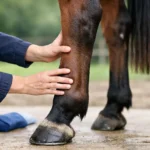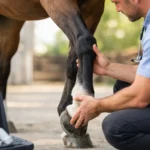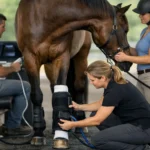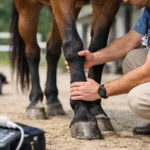

When a horse goes lame with a tendon injury, one of the first questions is always the hardest to answer – how long will this take? Horse tendon recovery time is rarely quick, and that uncertainty can be deeply frustrating when you are trying to plan turnout, work, costs and day-to-day care. The honest answer is that tendon healing usually takes months rather than weeks, and in more serious cases it can take close to a year or longer before a horse is ready for a full return to work.
Why tendon injuries take so long to heal
Tendons do a demanding job. They absorb force, store energy and help the limb stay efficient in movement, especially in horses that jump, gallop, school regularly or work on firm ground. Once damaged, tendon fibres do not simply knit back together like a small skin wound. Healing is slower because tendons have a limited blood supply, which means the repair process is gradual and often incomplete in the early stages.
That matters because the tendon may look calmer from the outside before it is truly ready inside. Heat and swelling can settle. The horse may appear more comfortable. Yet the new tissue is still weaker and less organised than normal tendon fibre. This is why horses can seem to improve and then suffer a setback when work increases too soon.
Typical horse tendon recovery time by severity
A mild tendon strain may need several weeks of rest and a carefully managed return to exercise, but many true tendon injuries need far longer than owners first expect. As a broad guide, a mild strain can take around 8 to 12 weeks to settle well, a moderate injury may need 4 to 6 months of structured rehabilitation, and a more severe tear can take 9 to 12 months or more.
These are only rough timeframes. Recovery depends on which tendon is affected, how much fibre damage has occurred, whether there is reinjury, and how well the rehabilitation plan is followed. Superficial digital flexor tendon injuries, for example, are well known for long healing periods and a real risk of recurrence if the horse returns to harder work before the tendon is ready.
What affects horse tendon recovery time?
The extent of the damage
The size and depth of the lesion are key. A small strain with minimal fibre disruption usually heals faster than a core lesion or partial tear. Ultrasound findings often give a clearer picture than outward appearance alone, which is why veterinary imaging is so important.
The stage at which treatment begins
Early management can shape the entire recovery. Prompt assessment, reduced workload, cooling, veterinary guidance and a clear rehab plan all help limit further damage. Waiting to see if it improves on its own can cost valuable time.
The horse’s age and workload
An older horse or one with a long history of hard work may heal more slowly than a younger horse with a simpler injury profile. Competition horses can also be harder to manage because their tendons are asked to cope with high loads again once work resumes.
Daily management
This is often overlooked, but it makes a real difference. Stable routine, controlled exercise, footing, bandaging where advised, weight management and consistent supportive care all influence progress. Tendon recovery is not just about the big vet appointments. It is about what happens every day in between.
Due to the poor blood flow into the tendon, using the Horse Treatment Pad as part of your daily stable routine increases circulation to the tendon, allowing it to recover faster from micro trauma from daily exercise, before it builds into a problem. Once an injury develops, the pad can still be used to help reduce the associated swelling and pain, and speed the healing process. It is safe to use in conjunction with treatment from your vet and equine physiotherapist.
The stages of tendon healing
Understanding the process helps explain why patience matters so much.
In the early inflammatory stage, the tendon is painful, hot and often swollen. The priority here is to reduce further strain and support the tissue while the body begins repair. This is usually the stage when horses need immediate rest and close monitoring.
The proliferative stage follows, when the body starts laying down new tissue. This sounds positive, but the new fibres are not yet strong or neatly aligned. They need time, and eventually the right kind of controlled loading, to become more functional.
The remodelling stage is the longest. The tendon slowly reorganises and strengthens in response to a carefully planned return to movement. This stage can continue for many months, which is why tendon injuries often test an owner’s patience long after the obvious symptoms have faded.
Why rest alone is not always enough
Box rest has its place, especially early on, but long-term healing usually needs more than simply stopping exercise. Tendons respond to controlled movement. Too much too soon is risky, but too little appropriate stimulation for too long can leave the tissue weaker and less adaptable.
That is why many rehabilitation plans gradually introduce walking in hand, then ridden walk, then steady increases based on repeat assessment. The balance can be delicate. A horse that feels bright and comfortable may still need a very conservative programme.
Alongside exercise planning, supportive therapies can help owners manage the daily reality of recovery. Drug-free options, such as the Horse Tendon Pad, that encourage circulation, ease stiffness, reduce pain and fit into a stable routine are especially valuable when healing is prolonged and consistency matters.
Supporting recovery between vet visits
This is where many owners feel they need something practical. You cannot speed biology beyond reason, but you can promote a better healing environment by using the Horse Tendon Pad. Good tendon care at home can help reduce day-to-day stiffness, improve comfort and keep the limb under regular attention rather than becoming a passive waiting game.
Targeted vibration therapy and acupressure support helps stimulate circulation and keep the area feeling looser, which is helpful for horses recovering from strain, managing ongoing tendon stress, or needing preventative support after work. For many owners, the value is not just in the therapy itself but in how easy it is to use consistently.
That consistency matters. Tendon healing is slow, and small daily actions often count more than occasional bursts of effort. A practical home-use solution gives owners a way to stay actively involved in care without relying solely on invasive or medication-based approaches.
Signs a horse is progressing well
Improvement is not only about the calendar. A horse recovering well will usually show reduced heat and swelling, improved comfort in movement, and better tolerance of a controlled exercise programme. Follow-up imaging may show that the lesion is filling and fibre alignment is becoming more organised.
Even then, progress is not always linear. Some horses have quiet periods of steady improvement and then react to a change in work, turnout or ground conditions. That does not always mean the whole process has failed, but it does mean the plan may need adjusting.
When recovery takes longer than expected
It is common for horse tendon recovery time to stretch beyond the first estimate. This can happen because the original injury was more severe than first thought, because the tendon has been stressed again during rehab, or because healing quality is not yet good enough for the next workload stage.
Some horses also carry underlying risk factors such as poor limb conformation, previous tendon damage or demanding competition schedules. In those cases, the goal may shift slightly from rushing back to full performance towards protecting long-term soundness. That is not giving up. It is often the wiser decision.
Reducing the risk of reinjury
The biggest mistake after a tendon injury is assuming that sound means fully healed. A horse may move comfortably before the tendon has regained enough strength for circles, faster work, jumping or deep going. Bringing work back in gradual, measured stages is one of the best ways to protect the result you have worked so hard for.
Preventative care also has a place once the horse is back in work. Daily tendon support after exercise, close attention to filling or heat, sensible fitness progression and avoiding sudden spikes in workload can all help reduce future strain. For horses in regular training, a simple recovery routine can be every bit as important as what happens after injury.
If you want more control during rehabilitation, the Horse Tendon Pad is built to fit exactly that need – straightforward daily support that works alongside professional care and helps make long recoveries feel more manageable.
A realistic outlook
Most tendon injuries do improve with time, but they ask for patience, structure and consistency. If you are wondering whether your horse is taking too long, remember that months of recovery are normal, and careful daily input with the Horse Tendon Pad is never wasted. The aim is not just to get back to work quickly, but to give the tendon the best chance of staying strong when your horse returns to it.
If you are looking for a reliable way to support horse tendon treatment, the Horse Tendon Pad offers a simple and effective option. You can learn more about how it works on our horse tendon therapy page or explore the Horse Tendon Pad to see how it can support your horse’s recovery. Research into vibration therapy for muscle recovery also shows how improving circulation can support healing and reduce discomfort.